
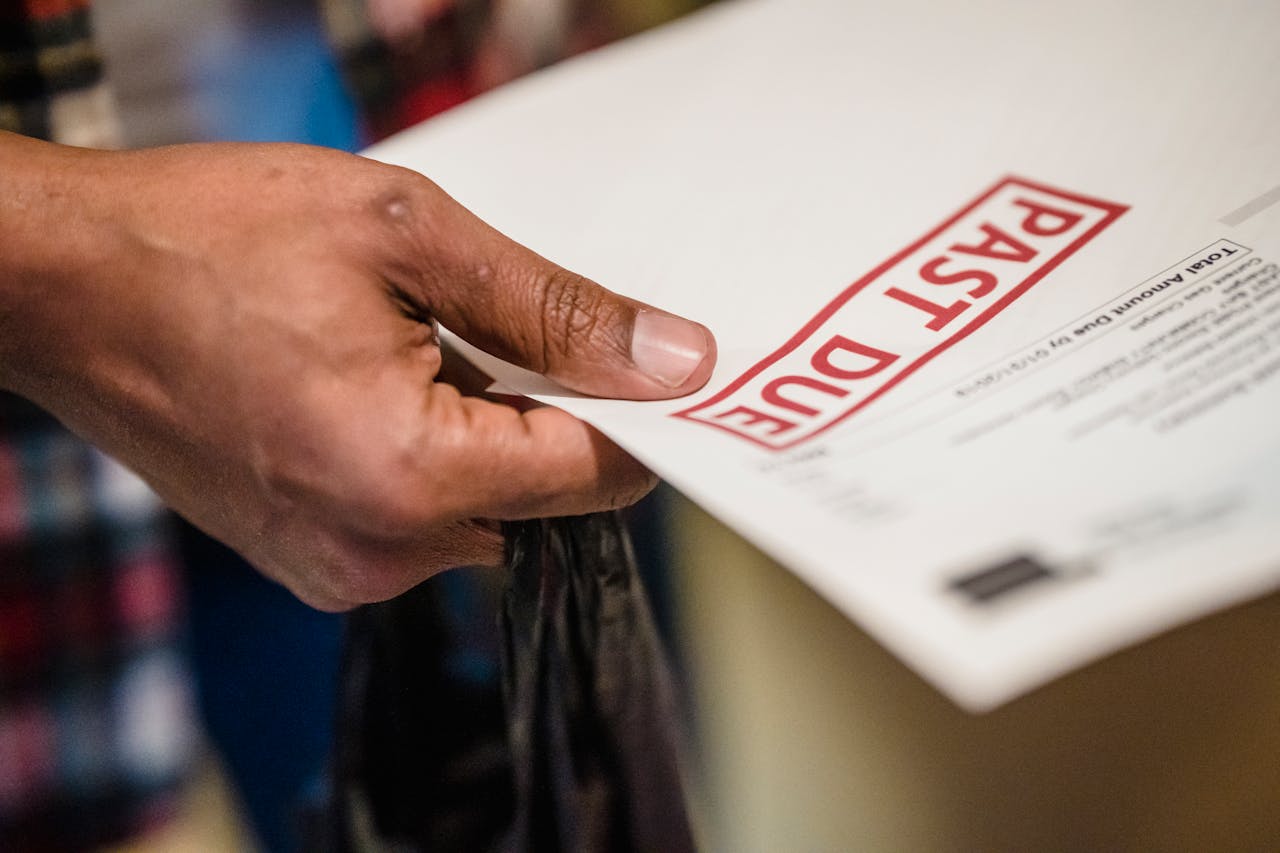
It’s not a credit card. It’s not a loan. There’s no APR listed. And Wall Street literally cannot track how much of it exists — they call it “phantom debt.” Buy Now Pay Later has quietly grown into a $65 billion industry used by 54 million Americans, nearly a quarter of whom missed a payment last year. Here’s what’s actually happening behind that frictionless checkout button.
Buy Now Pay Later Grew 30x in Six Years — Nobody Was Watching
In 2019, the six largest Buy Now Pay Later lenders originated $2.2 billion in loans. By 2025, that number had reached $65.3 billion — nearly a 30-fold increase in six years, according to the Consumer Financial Protection Bureau. Approximately 53.6 million Americans used a BNPL service in 2023, with usage continuing to climb. Klarna, Afterpay, Affirm, PayPal Pay Later, and Apple Pay Later have become as ubiquitous at checkout as Visa and Mastercard.
The pitch is simple: split your purchase into four interest-free installments, pay every two weeks, done. No application. No hard credit pull. No APR disclosure. It feels like a budgeting tool — a smarter, cheaper alternative to putting things on a credit card. That framing is exactly what makes it dangerous.
BNPL is debt. It is structured as debt. It behaves like debt. And because it has been designed to not feel like debt — no interest, no scary APR, no big lender branding — tens of millions of Americans are accumulating it without the psychological guardrails that typically come with borrowing.
The Delinquency Numbers Are Alarming
The “interest-free” framing of BNPL obscures the fact that missing a payment has real consequences — and a lot of people are missing payments. According to data compiled by the CFPB and independent researchers:
| Metric | Number | Context |
|---|---|---|
| BNPL users who paid late in 2024 | Nearly 1 in 4 (24%) | Up from 18% the prior year |
| BNPL users carrying multiple loans at once | 60% | Stacking loans across Klarna, Affirm, Afterpay simultaneously |
| Users who have missed a payment ever | ~33% | One in three BNPL users |
| Delinquency rate, ages 25–34 | 23.1% | Highest of any age group |
| Delinquency on purchases over $1,000 | 31.4% | Nearly 1 in 3 large BNPL purchases goes delinquent |
The highest-earning borrowers are not immune either. 49% of households earning over $100,000 reported missing a BNPL payment — a figure that challenges the assumption that BNPL problems are exclusively a low-income phenomenon. The product is designed to be used across income levels, and the late payment patterns reflect that broad adoption.
What happens when you miss a BNPL payment varies by provider, but common consequences include: immediate late fees ($7–$15 per missed installment), loss of future BNPL eligibility with that provider, potential collections referral, and — increasingly — a credit score impact.
The Phantom Debt Problem: Your Lender Can’t See What You Owe
This is the aspect of BNPL that has the most systemic financial risk — not just for individual borrowers, but for the broader credit market. Because most BNPL debt does not appear in standard credit bureau files, the picture of American household debt that lenders, regulators, and economists use is materially incomplete.
Consider what this means in practice: You apply for a car loan. The lender pulls your credit and sees $8,000 in credit card debt and a $350/month student loan payment. What they don’t see is your $200/month in active BNPL installments across three different platforms. They approve you for a car payment assuming a debt load you no longer actually have. The system is approving credit based on a fiction.
The Federal Reserve’s household debt tracking, which is one of the primary tools economists use to assess consumer financial stress, is similarly blind to BNPL. This means the true level of household debt in America is higher than official figures show — by an amount nobody can precisely measure, because no central tracking exists.
Credit Reporting Is Changing — And Not Necessarily in Your Favor
The invisible-debt problem is slowly changing as major BNPL providers begin reporting to credit bureaus. But the transition is inconsistent and the implications for borrowers cut both ways:
| Provider | Credit Reporting Status | What It Means for You |
|---|---|---|
| Affirm | Reports all pay-over-time plans to Experian and TransUnion | On-time payments may help credit; late payments will hurt it |
| Apple Pay Later | Reports all BNPL data to Experian (since Feb 2024) | First major provider to fully report; no hiding missed payments |
| Klarna | Reports “Monthly Pay” products to TransUnion; Pay-in-4 not yet reported | Depends on which Klarna product you’re using |
| Afterpay | Not broadly reporting to major bureaus as of 2025 | Late payments less likely to hit credit score — for now |
Some credit bureaus are creating separate “specialty files” for BNPL data rather than integrating it into core credit files — which means it may not yet affect your FICO score the same way a missed credit card payment would. But this architecture is changing, and the direction of travel is clear: BNPL debt is becoming visible. Borrowers who have been late on BNPL payments under the assumption it doesn’t matter should not assume that will remain true.
BNPL vs. Credit Card: The Real Cost Comparison
The common framing is that BNPL is “free” while credit cards charge 20%+ interest. This is true in the narrow case where you pay every installment on time and pay your credit card balance in full. But the comparison looks very different in real-world usage patterns:
| Scenario | BNPL | Credit Card (Paid in Full) |
|---|---|---|
| Purchase $400, pay all installments on time | $0 interest or fees | $0 interest + possible rewards earned |
| Miss one $100 installment | $7–$15 late fee immediately | No penalty if minimum paid |
| Carry balance beyond intro period (longer-term BNPL products) | 0–36% deferred interest depending on product | ~21% APR on remaining balance |
| Impact on credit score if you miss payment | Increasingly reported; growing risk | Reported immediately; significant impact |
| Purchase protection / dispute resolution | Limited; varies by provider | Strong; federal chargeback rights under FCBA |
The hidden cost comparison: a credit card gives you federal consumer protections under the Fair Credit Billing Act — the right to dispute a charge, withhold payment for defective goods, and get your money back if a merchant doesn’t deliver. BNPL has none of these federal protections. If you use BNPL to buy something that never arrives or is defective, your recourse is limited to the goodwill of the BNPL company, not federal law.
Who Uses BNPL — And Who It Hurts Most
BNPL was initially positioned as a tool for younger, digitally native consumers making considered purchases. The data tells a more complicated story. Consumers earning under $75,000 are four times more likely to use BNPL than higher earners — and they’re using it not for discretionary splurges but as a cash flow bridge, often to buy necessities they can’t afford to pay for in full at the time of purchase.
When groceries, utility bills, and basic clothing are being financed through BNPL split-payment programs — a trend that accelerated through 2023 and 2024 as inflation squeezed lower-income households — the product has migrated from a convenience tool to a financial coping mechanism. That shift matters because the delinquency risk profile is completely different: a consumer who uses BNPL to buy a discretionary item they could afford to wait on is very different from a consumer using it because they can’t buy food without splitting the payment.
Write down every active BNPL plan — provider, balance, due dates. Most people underestimate how many they have. If the total across all plans is more than one month’s take-home pay, you’re overextended in BNPL debt regardless of what your credit card statement shows.
Late fees hit fast and forgiveness is limited. Set every BNPL installment plan to autopay from a bank account with sufficient funds. Missing a payment because you forgot a due date is an entirely avoidable way to start a collections process.
For purchases you can genuinely afford, a credit card with federal dispute rights, rewards, and a single consolidated statement is almost always a better tool than BNPL. The only reason to choose BNPL is if the merchant doesn’t accept cards — or if you won’t pay the card balance in full, in which case you shouldn’t be making the purchase at all.
Having simultaneous Klarna, Affirm, and Afterpay balances is the BNPL equivalent of maxing out three credit cards. Each plan individually looks manageable; together they create cash flow pressure that makes delinquency on at least one nearly inevitable.
Before using a BNPL product, check its current credit reporting policy. Affirm and Apple Pay Later already report to bureaus. Others will likely follow. A missed payment that doesn’t affect your credit today may retroactively matter as reporting expands — and some providers can send delinquent accounts to collections, which always hits credit.
The most important question before clicking “Pay in 4”: would you buy this if you had to put it on a credit card and see that number on your statement? BNPL’s frictionless design is intentional — it’s engineered to reduce the psychological resistance to spending. Applying the credit card mental test re-introduces that friction artificially.
What Regulators Are (and Aren’t) Doing
The CFPB under the Biden administration had been moving toward more formal regulation of BNPL — including a 2024 interpretive rule that classified BNPL “pay in 4” products as credit cards under the Truth in Lending Act, which would have required dispute rights and periodic billing statements. That rule has been deprioritized under the current administration, and the CFPB’s enforcement posture has been significantly scaled back.
The practical result: BNPL remains a largely self-regulated industry, with consumer protections varying by company policy rather than federal mandate. The credit reporting shift is happening market-driven rather than regulatory-driven — providers are beginning to report partly to improve their own underwriting, not because they’re required to. Until federal standards are established, borrowers need to protect themselves because the regulatory safety net that exists for credit cards largely does not apply to BNPL.
Frequently Asked Questions
Does using BNPL hurt your credit score?
It depends on the provider and the product. Affirm reports all pay-over-time loans to Experian and TransUnion; Apple Pay Later reports to Experian. A missed payment with these providers will likely hurt your credit score similarly to a missed credit card payment. Other providers like Afterpay do not currently report to major bureaus, though delinquent accounts can still be sent to collections — which always impacts credit. The safest assumption going forward is that BNPL payments will increasingly be visible to credit bureaus, and late payments will have consequences.
Is BNPL really “interest-free”?
The standard “Pay in 4” product — four equal installments every two weeks — typically charges no interest if all payments are made on time. But longer-term BNPL financing products (6, 12, or 24 months) often charge 0–36% APR, and some use “deferred interest” structures where if you don’t pay the full balance before the promotional period ends, all the interest from day one is charged retroactively. Always read the full terms. “No interest” is only guaranteed if you’re using the basic 4-installment product and you pay on time.
What happens if I dispute a purchase I made with BNPL?
Unlike credit cards, which have federal dispute rights under the Fair Credit Billing Act, BNPL purchases are not protected by federal law in the same way. If a merchant fails to deliver, ships the wrong item, or you’re dissatisfied, your recourse depends on the BNPL provider’s own dispute policy — which varies significantly. In practice, you’ll need to resolve the issue with the merchant directly or go through the BNPL platform’s support process, without the legal backstop that a credit card chargeback provides.
Why do retailers push BNPL so aggressively at checkout?
Because it increases their conversion rates and average order values — by a lot. Research consistently shows that BNPL availability at checkout increases purchase completion by 20–30% and average basket size by 30–50%. Retailers pay BNPL providers a merchant fee (typically 2–8% of the transaction) because the sales increase justifies it. The BNPL business model is built on transaction volume from merchants, not interest from consumers — which is why the consumer-facing terms seem so favorable. The product is designed to maximize spending, and it does.